The client needed a backend environment that could keep critical recording and processing workflows stable without creating operational risk or constant firefighting around fragile integrations.
Case Studies
Industrial and Enterprise Case Studies
Production reliability, integrations and backend stabilization.
These case studies show production-critical .NET, SQL Server, RabbitMQ, industrial integration, desktop tooling and backend stabilization work across enterprise and manufacturing environments.
They focus on the engineering problems behind reliability, integration boundaries, supervision software, messaging flows, deployment control and long-lived systems that have to keep running.
What these case studies show
Typical project patterns where architecture, implementation, backend reliability, and operational thinking need to work together.
Delivery areas
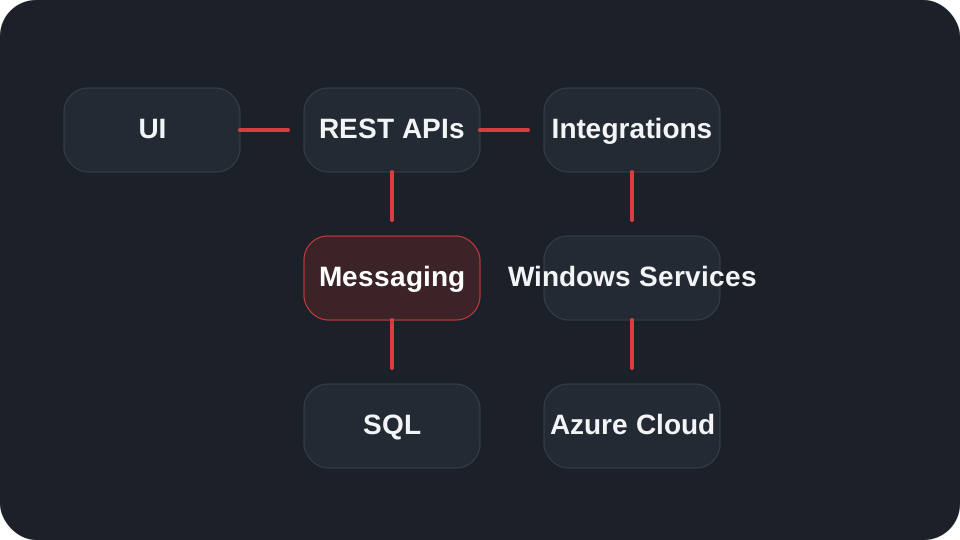
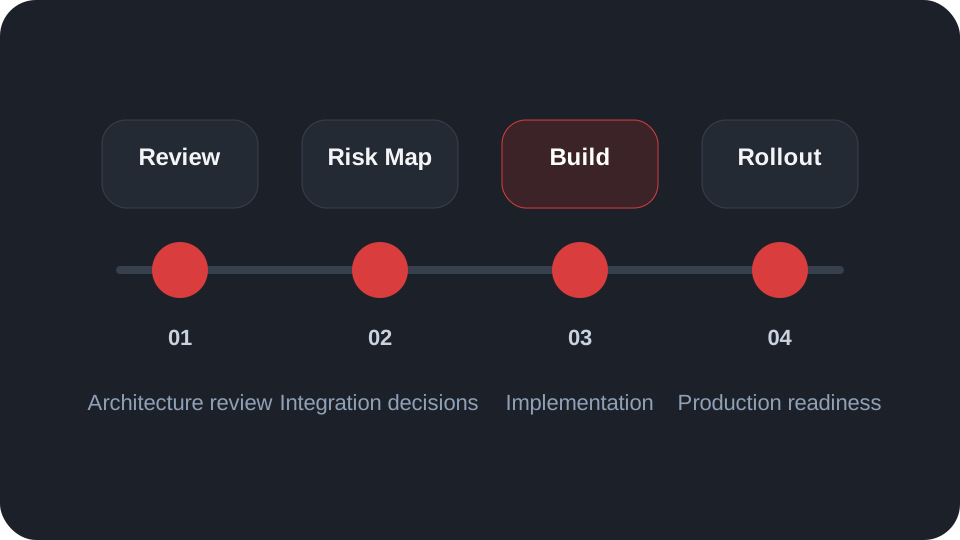
Case studies
Case studies across .NET, SQL Server, RabbitMQ, industrial integrations and enterprise systems.
Frequentis AG - Mission-Critical Backend Reliability
Backend and microservice work for high-reliability recording and operational systems. The delivery focused on server-side components, Windows Services, messaging-heavy processing logic and maintainability in an environment where fragile backend behavior creates operational risk.
Improved backend reliability by 7% in a continuity-critical environment used in worldwide operational scope.
Architecture decisions, backend implementation, and reliability-focused delivery work across Windows Services, messaging, and server-side flows, delivered in 6 months.
The backend platform became easier to support, safer to evolve, and more dependable under production pressure.
- Windows Services and backend components supporting recording workflows
- microservices, messaging, and integration-heavy server-side architecture
- focus on reliability, maintainability, and production-grade delivery
- delivery completed in 6 months and used in worldwide operational scope
LS telcom AG - Installer & deployment
For LS telcom AG, the use case centered on desktop installer delivery in a WinForms and WiX-based environment, where the technical goal was not just to build an installer, but to design a structured deployment approach that could support real enterprise and industry software rollout needs. The project required understanding how installation flows, packaging, user-defined setup logic, and deployment constraints come together in practice, which meant balancing desktop engineering detail with broader concerns around repeatability, supportability, and rollout quality. This kind of work is representative of delivery situations where organizations need a partner who can step into an existing technical landscape, understand the operational implications of the tooling, and turn a complex setup process into something controlled, maintainable, and ready for real use.
The client needed enterprise and industry software rollout to become more controlled and repeatable instead of relying on installer behavior that was harder to support over time.
Improved rollout clarity by 12% in an enterprise desktop environment used by 20 developers.
Installer structure, deployment logic, and test-oriented delivery practices in a WinForms and WiX-based environment, delivered in 6 months.
A more controlled deployment model that was easier to repeat, maintain, and roll out consistently.
- design of a user-defined installer and controlled setup flow
- desktop engineering with C#, WiX Toolset, and automation support
- delivery process aligned with TDD, BDD, and CI-oriented workflows
- delivery completed in 6 months and used by 20 developers
Atlas Copco IAS - Industrial Process Supervision Software
C# desktop/backend software for adhesive process control and production supervision around KUKA robots in automotive manufacturing. The work combined desktop software, backend-oriented responsibilities, process supervision, MES/ERP integration points and production-context engineering.
The client needed software that could support production supervision without introducing instability, process friction, or gaps between manufacturing systems and the control layer.
Improved production supervision confidence by 14% in a factory-wide delivery environment.
C#, WinForms, WPF, T-SQL, Python, MES, ERP, multithreading, supervision logic, desktop and backend implementation layers, delivered in 18 months.
The software layer for supervision and control became more dependable in a real manufacturing environment.
- integration with MES and ERP-related process flows
- desktop and backend support for production supervision
- multithreaded process control in a factory-grade software context
- delivery completed in 18 months with factory-wide production scope
Miele & Cie. KG - Engineering Logic Tooling for Product Systems
Flow-based software for modelling, validating and maintaining product logic in long-lived engineering environments. The solution helped engineering teams model, visualize and configure process flows while keeping product logic understandable and maintainable over time.
Engineering teams needed a clearer way to design and manage appliance behavior without losing traceability, execution consistency, or control over increasingly complex product logic.
Improved engineering visibility by 15% in a product environment used by 1000+ users.
Desktop application development, backend services, flow-based logic design, validation mechanisms, and integration with embedded systems used in physical products, delivered in 6 months.
Product logic became easier to model, understand, and maintain over time.
- graphical flow editors and rule definition for engineering teams
- validation mechanisms and backend services supporting product logic
- integration between engineering tooling and embedded execution layers
Volkswagen AG - Desktop product development
For Volkswagen AG, the use case combined desktop product development with technical leadership, which meant taking responsibility not only for implementation work, but also for architecture, engineering direction, and overall technical coherence of the delivered solution. This kind of delivery goes beyond isolated coding tasks, because the real value comes from shaping patterns, making sound design decisions, and helping the product evolve in a way that supports both immediate delivery goals and longer-term maintainability. It is a strong example of the situations we often support, where an organization needs someone who can contribute hands-on at code level while also bringing structure, architectural judgment, and technical ownership to a broader product initiative.
The client needed more than coding capacity. The product required technical leadership that could keep architecture, design decisions, and day-to-day implementation moving in the same direction.
Improved delivery coherence by 10% across a scope used by 40+ teams or delivery units.
Product architecture, design structure, hands-on implementation support, and technical leadership close to delivery, delivered in 6 months.
The product delivery track became more coherent and easier to maintain over the long term.
- technical management combined with hands-on implementation
- product architecture, design patterns, and desktop engineering
- delivery in an enterprise environment with structured quality tooling
- delivery completed in 6 months and used across 40+ teams / scope units
Schneider Electric - Engineering tooling
For Schneider Electric AG, the delivery involved a plugin-based desktop application supporting engineering and continuous-integration-related workflows, where the technical challenge was not simply to build features, but to shape an extensible application structure that could support real internal usage over time. The work required combining architecture design with practical implementation, so that the application remained modular, understandable, and suitable for further development in a context where engineering tools have to support productivity rather than become another source of maintenance overhead. As a use case, this reflects the projects where we help organizations turn internal technical needs into structured, usable software solutions that fit engineering teams, operational processes, and the long-term reality of maintaining business-supporting tools.
The internal tool had to stay useful for engineering teams over time instead of becoming another rigid application that slows work down and increases maintenance overhead.
Improved internal tooling effectiveness by 25% in a company-wide environment used by 40 users.
Architecture design, implementation, and extensibility decisions for a plugin-based desktop tool supporting engineering teams, delivered in 12 months.
A tooling base that could evolve over time without losing clarity or becoming a maintenance burden.
- software architecture combined with hands-on delivery
- plugin-based desktop application design
- focus on maintainability and CI-related process support
- delivery completed in 12 months and used by 40 users company-wide
Confidential client - Telemetry & Azure
For a confidential client in Germany, the use case focused on enterprise telemetry delivery combining GIS integration, backend services, Cloud components, and data-heavy operational workflows in an Azure-oriented environment. The challenge in this kind of project is that value is created not by any one isolated technology, but by making multiple moving parts work together coherently, including telemetry ingestion, data modeling, messaging, Cloud services, and interfaces that expose the results to operational and business users. This is exactly the kind of engagement where we help most effectively, because it requires architectural thinking, strong implementation capability, and the ability to connect integrations, backend logic, and Cloud delivery into a system that is not just technically complete, but genuinely usable in production.
The client needed telemetry delivery to work as one usable production system instead of a collection of disconnected Cloud, backend, and integration components.
Improved telemetry delivery coherence by 7% in a company-wide environment used by 20+ users.
Telemetry ingestion, Azure services, integration layers, event-driven components, and delivery structure across Cloud and backend layers, delivered in 6 months.
A more production-ready telemetry platform that was easier to operate and easier to extend.
- telemetry ingestion, backend logic, and integration layers
- Azure-based services, event-driven components, and Cloud operations
- support for data-rich business and operational interfaces
- delivery completed in 6 months and used by 20+ users company-wide