Introduction
In today’s fast-paced software development environment, organizations need flexibility, speed, and continuous improvement. Traditional project management methods often struggle to keep up with rapidly changing requirements. This is where Scrum, one of the most widely used Agile frameworks, comes into play.
Scrum provides a structured yet flexible approach to delivering complex products. It focuses on iterative progress, collaboration, and delivering value early and often. Whether you are building enterprise software, industrial automation systems, or cloud platforms, Scrum helps teams adapt and succeed.
What is Scrum?
Scrum is an Agile framework used for managing and completing complex projects. It is based on empirical process control theory, which emphasizes:
- Transparency
- Inspection
- Adaptation
Unlike traditional methodologies, Scrum does not try to predict everything upfront. Instead, it embraces change and continuous feedback.
Scrum Framework Overview
At its core, Scrum consists of roles, events, and artifacts working together in a structured cycle.
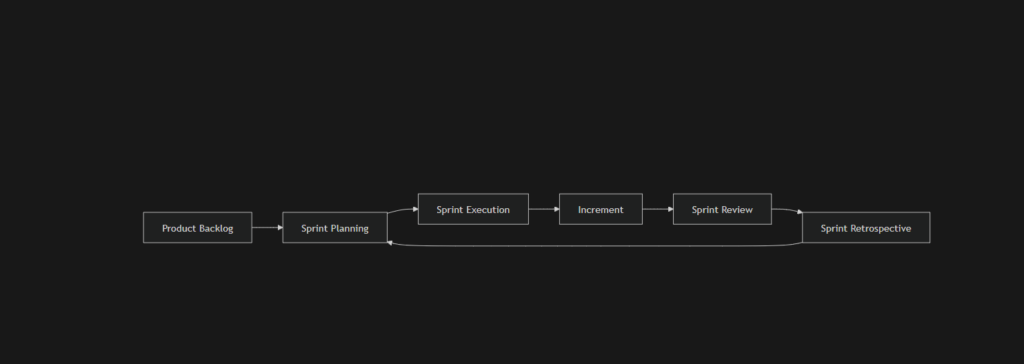
This loop represents continuous delivery and improvement.
Scrum Roles
Scrum defines three key roles:
1. Product Owner
The Product Owner is responsible for maximizing product value. They manage the Product Backlog and prioritize features.
Key responsibilities:
- Define product vision
- Prioritize backlog
- Communicate with stakeholders
2. Scrum Master
The Scrum Master acts as a facilitator and coach.
Responsibilities:
- Remove impediments
- Ensure Scrum practices are followed
- Support the team
3. Development Team
A cross-functional, self-organizing team responsible for delivering increments.
Characteristics:
- 3–9 members
- No sub-teams
- Collective ownership
Scrum Events
Scrum defines time-boxed events that structure the work.
Sprint
The Sprint is the core unit of Scrum — typically 1–4 weeks.
- Fixed duration
- Produces a usable increment
- No changes that jeopardize the goal
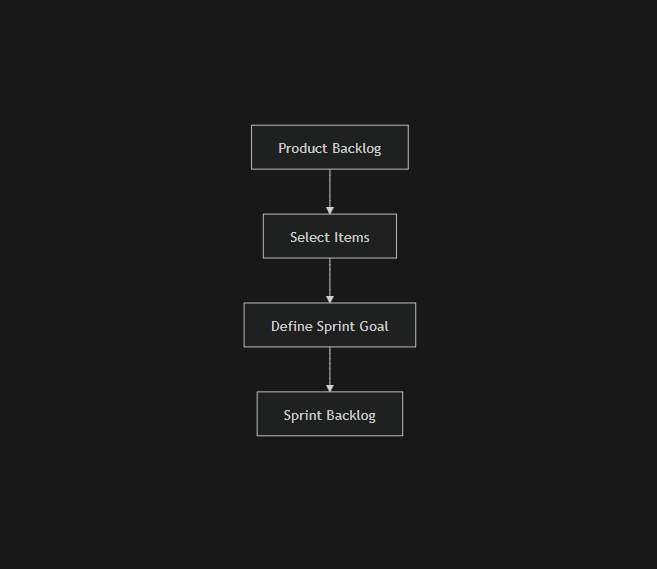
Sprint Planning
Defines what will be done in the Sprint.
Daily Scrum
A short daily meeting (15 minutes).
Questions answered:
- What did I do yesterday?
- What will I do today?
- Are there any blockers?
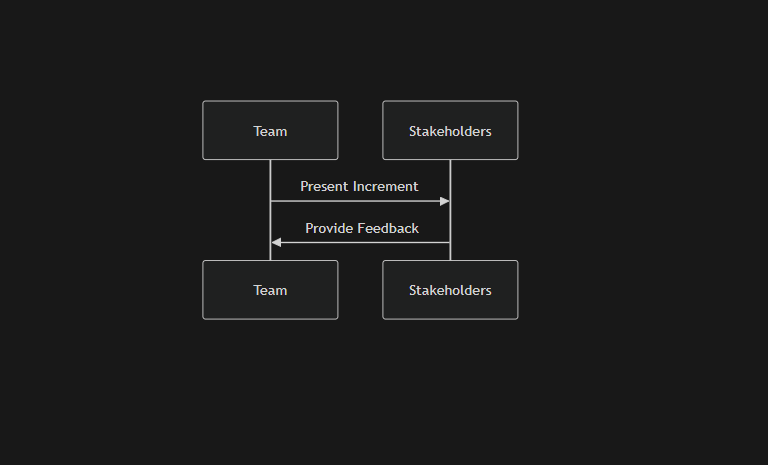
Sprint Review
Presentation of completed work to stakeholders.
Sprint Retrospective
Focuses on process improvement.

Scrum Artifacts
Artifacts represent work and value.
Product Backlog
An ordered list of all features and requirements.
Sprint Backlog
Selected backlog items for the Sprint.
Increment
The final output of a Sprint — must be:
- Working
- Tested
- Potentially releasable
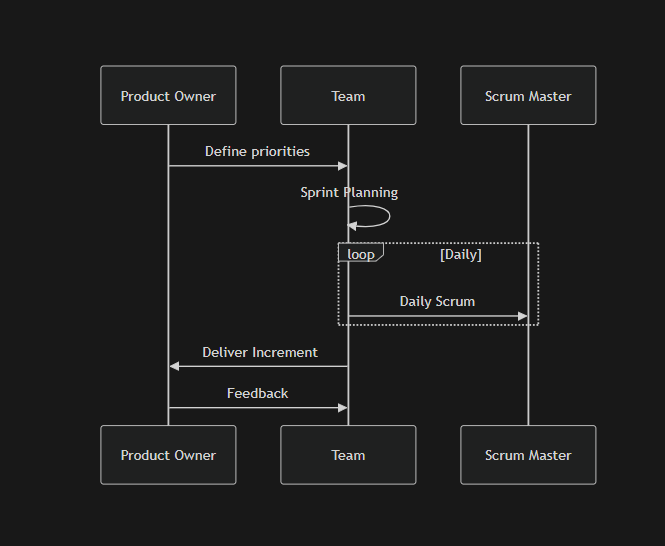
Scrum Workflow Example
Advantages of Scrum
1. Flexibility
Scrum adapts to changing requirements.
2. Faster Delivery
Incremental releases allow early value delivery.
3. Better Quality
Continuous testing and feedback improve quality.
4. Transparency
All work is visible and trackable.
Scrum vs Traditional Project Management
| Aspect | Scrum | Waterfall |
|---|---|---|
| Flexibility | High | Low |
| Planning | Iterative | Upfront |
| Delivery | Incremental | Final |
| Feedback | Continuous | Late |
Scrum in Enterprise Environments
Scrum is not limited to startups. It is widely used in:
- Banking systems
- Manufacturing software
- Industrial automation
- Cloud platforms
For example, in industrial systems (PLC + SCADA + .NET), Scrum enables:
- Incremental integration
- Continuous testing of machine communication
- Faster deployment cycles
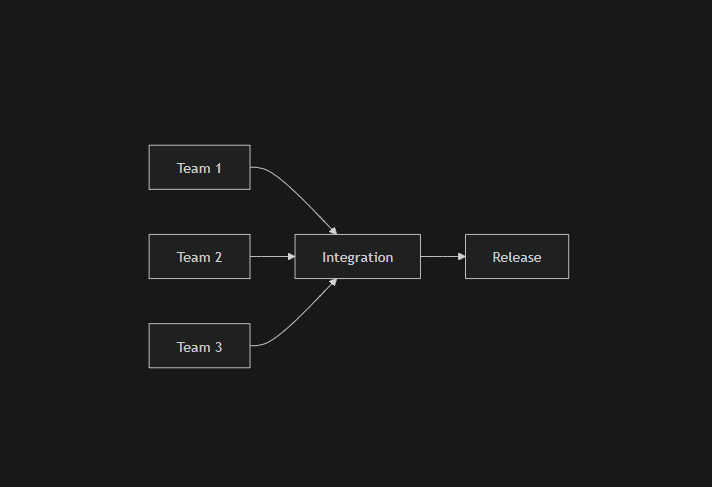
Scaling Scrum
For larger organizations, frameworks like:
- SAFe
- LeSS
- Nexus
are used to coordinate multiple Scrum teams.
Common Scrum Mistakes
1. No clear Product Owner
Leads to confusion and poor prioritization.
2. Micromanagement
Scrum teams must be self-organizing.
3. Ignoring Retrospectives
Stops improvement.
4. Overloading Sprint
Reduces quality and predictability.
Best Practices
- Keep Sprints consistent
- Define clear Sprint Goals
- Maintain backlog quality
- Automate testing and deployment
- Encourage open communication
Tools Supporting Scrum
Popular tools include:
- Jira
- Azure DevOps
- Trello
These tools help manage backlogs, track progress, and visualize workflows.
Real-World Example
Imagine a team building a manufacturing monitoring system:
- Sprint 1: Basic data collection
- Sprint 2: Dashboard
- Sprint 3: Alerts
- Sprint 4: Integration with ERP
Each Sprint delivers usable functionality.
Conclusion
Scrum is a powerful framework for managing complex projects in a dynamic environment. Its focus on collaboration, iterative delivery, and continuous improvement makes it ideal for modern software development.
By adopting Scrum, organizations can deliver higher-quality products faster while adapting to change effectively.
References
https://en.wikipedia.org/wiki/Scrum_(project_management)
More Info
We implement this in real production systems.
If you need help → contact us